High-pressure water jetting
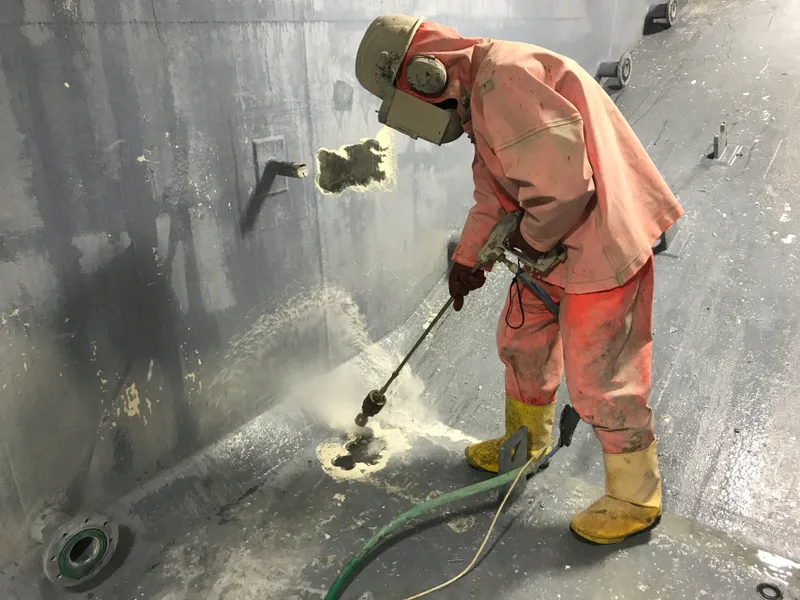
About the Service
Fast and effective removal of deposits, rubber, old coatings, and dirt from tanks, floors, and technology. Ideal for surface preparation before further treatment.
Key Advantages
- Precise and controlled cleaning
- Adjustable pressure for different materials
- Fast execution
- Minimal environmental impact
Fields of Application
- Industrial floors
- Tanks and containers
- Technological units
- Surface preparation
- Steel structures
High-pressure water jetting - technology and applications
High-pressure water jetting is a versatile surface cleaning and preparation technique. We use it to remove deposits, rubber buildup, old coatings, and heavy contamination from tanks, floors, piping, and technological units.
Water pressure ranges between 300 and 3,000 bar depending on substrate sensitivity and task requirements. Lower pressures are used for delicate cleaning, while ultra-high pressures tackle severe scale and rubber coatings.
Where we use water jetting
Water jetting is widely deployed on industrial floors, storage tanks, processing equipment, steel structures, and piping systems. It provides an ideal surface profile for subsequent protective coatings.
Benefits of water jetting
- Clean solution - zero abrasive media, zero chemical waste
- Precise and controlled cleaning
- Adjustable pressure for diverse materials
- Rapid execution
- Minimal environmental footprint
Expert articles about water jetting
What is high-pressure water jetting?
High-pressure water jetting (also known as hydrojetting or water jet) is a universal technology for cleaning, coating removal, surface preparation and concrete demolition. Learn how it works, what pressures are used, where it is applied and what to watch out for when selecting a contractor.
Benefits of water jetting
A comprehensive list of advantages and limitations of high-pressure water jetting — when it makes sense to use a water jet instead of blasting or chemical removal, what the method limits are and what you gain from hydrojetting on steel and concrete.
Environmental considerations of water cleaning
Why high-pressure water jetting is gentler on the environment than sandblasting and chemical stripping. Method impact comparison, wastewater handling and how greener technology helps companies meet stricter regulations.
What does 3,000 bar mean?
An explanation of high pressure in water jetting — how pressure affects parameters, why the pressure figure alone is insufficient to assess equipment performance and when you truly need extreme pressure.